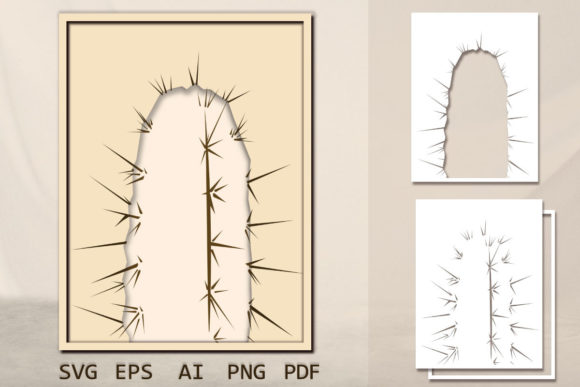
3D SVG Shapes: 3D Cactus
As a brand designer with years of experience, I always look for design assets that can elevate a small business’s visual identity without overcomplicating the message. The 3D Cactus graphic design asset caught my attention immediately. Its layered papercut style gives it a tactile, handmade feel that feels both modern and organic. This is not just a decorative element—it's a versatile tool for local businesses looking to stand out in a crowded market.
The Mood and Personality of 3D Cactus
The 3D Cactus evokes a sense of warmth and approachability. Its three-dimensional structure suggests craftsmanship and care, making it ideal for brands that want to communicate authenticity. It leans into a friendly, playful vibe but also has a subtle elegance that could work for more refined spaces. This makes it a great fit for a variety of small business branding projects, from bakeries and coffee shops to handmade soap businesses and boutique stores.
Depending on how it's used, the 3D Cactus can feel either whimsical or sophisticated. When paired with soft pastel tones, it becomes a gentle, inviting element. With bold colors, it adds energy and personality. Either way, it brings a unique visual texture that can help differentiate a brand from competitors.
Real-World Applications for 3D Cactus
In my recent project for a local skincare brand, I used the 3D Cactus as a central design element on product labels and packaging. Its layered papercut style added depth and interest without overwhelming the minimalist aesthetic of the brand. The PNG files with transparent backgrounds made it easy to integrate into different color schemes and layouts.
This asset works well in logo design, especially for businesses that want to emphasize nature, sustainability, or creativity. It can be scaled up for hero graphics on social media posts or website banners, or down for use on small product tags and hang cards. The EPS and AI files offer flexibility for customizing the design to match a brand’s specific needs.
For a seasonal campaign, I incorporated the 3D Cactus into a series of printable inserts and promotional posters. Its ability to stand out on a page while maintaining clarity made it perfect for creating visual hierarchy in marketing materials. Whether used as a background element or a focal point, it adds a layer of sophistication that enhances the overall design.
Supporting Business Presentation with 3D Cactus
The 3D Cactus can significantly improve a small business’s first impression. A well-designed product label or packaging can make a customer pause and take notice. When used consistently across all touchpoints—website, social media, print materials—the 3D Cactus helps reinforce brand identity and create a cohesive look.
It also supports better product recognition. In a retail environment, a unique design element like this can help a product stand out on the shelf. For food businesses or handmade sellers, this can mean the difference between a customer choosing your product over a competitor’s.
When used thoughtfully, the 3D Cactus can build trust with customers. A polished, professional appearance signals quality and reliability. It can also foster a stronger emotional connection by evoking feelings of warmth, creativity, and care—key elements for building brand loyalty.
Where 3D Cactus Excels in Design
The 3D Cactus shines in product labels and packaging accents. Its layered papercut style adds dimension without being too busy. It works well as a decorative brand element, especially when paired with clean typography and minimal text. For a boutique store or home decor shop, it can serve as a signature visual that ties the entire brand together.
It’s also effective in promotional banners and social media campaign graphics. The PNG files allow for easy integration into digital platforms, while the vector files provide scalability for print. As a 3D SVG, it maintains sharpness at any size, making it ideal for both web design and editorial design projects.
For a seasonal product campaign, the 3D Cactus can be adapted to fit different themes. Whether it's a holiday promotion or a summer sale, its versatility allows it to evolve with the brand’s messaging.
Where to Use 3D Cactus with Caution
While the 3D Cactus is a powerful design asset, it’s important to consider where it might not be the best fit. In formal corporate branding, its handmade aesthetic may clash with a more structured, minimalist approach. Similarly, in very small labels or crowded layouts, the detail may become lost or distracting.
It should also be used carefully in areas with legal information or ingredient lists, where clarity and readability are essential. Low-contrast backgrounds or designs where the decoration competes with important text may reduce its effectiveness.
For luxury minimalist brands, the 3D Cactus could feel too ornate. In such cases, a simpler, more restrained design may be more appropriate. Always test the asset in the context of the full design to ensure it complements rather than overwhelms.
Practical Designer Notes on 3D Cactus
Before finalizing any design, I recommend testing the 3D Cactus on real packaging mockups. This helps visualize how it will look in physical form and ensures it translates well across different materials and finishes. Check how it appears in black and white to see if it still holds visual interest without color.
Preview it on small labels to ensure it remains legible and impactful. Test it with your brand’s color palette to confirm it aligns with your existing identity. Compare it with competitor packaging to ensure it stands out in the market.
Review the PNG transparency to make sure it blends seamlessly with your background. Inspect the SVG or vector files for editability, especially if you need to adjust the design for different applications. Test it beside various font styles—serif, sans serif, script, handwritten, and display—to see how it interacts visually.
Finally, always confirm the commercial license before using the 3D Cactus for client work or physical product sales. Ensure it meets the requirements for your specific use case, whether it’s for a digital product, print material, or social media graphics.